Harbor: Apple Plans a Mac App for Local A.I. Without the Cloud


Set Trending Topics as a preferred source on Google.
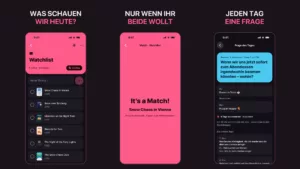
Apple appears to be building the app that turns a desktop Mac into a small data center: It is called Harbor, runs open-weight models locally and links several Macs by cable into a cluster. That is according to Aaron Perris, who is known for his Apple finds and posted the details on X. The app fits everything Apple has done around local A.I. this year, from new chips with up to 512 gigabytes of memory to its surprising collaboration with Meta.
What Harbor Is Supposed to Do
According to the description Mr. Perris published, Harbor turns the Mac into a private inference server. The key points:
- Local instead of cloud: Open-weight models run directly on Apple silicon. Data is never supposed to leave the user’s own hardware.
- Clusters: Two or more Macs with Thunderbolt 5 are connected, and Harbor pools their memory into a single resource. That is meant to run models too large for any single computer, or to serve more requests at the same time.
- Setup: The app detects the connected devices automatically. No command line, manual configuration or infrastructure expertise is supposed to be needed.
- Models: Open-weight models can be browsed, downloaded and loaded from within the app.
Harbor is said to be in a private preview under the Claris brand. Claris is Apple’s subsidiary for business software, known for the FileMaker database. According to MacRumors, there was already an App Store listing, which has since been removed. The sign-up page at Claris asks for a company name, which points to businesses as the target audience. Whether the app will be free is unclear. Apple has not commented so far.
The Groundwork: Macs Are Being Upgraded for A.I.
Harbor would not come out of nowhere. Apple has spent months preparing hardware and software for exactly this use. macOS Tahoe 26.2 brought a fast direct connection between Macs over Thunderbolt 5, known as RDMA, which speeds up clustering. Then there is MLX, Apple’s open-source framework for A.I. computation on its own chips.
The hardware followed in the summer. Apple explicitly marketed its new M6 and M5 Ultra chips for running large A.I. models directly on the device:
| Device | Chip | Memory | U.S. price |
|---|---|---|---|
| Mac mini | M6 | up to 32 GB | from $899 |
| Mac mini | M5 Pro | up to 64 GB | from $1,699 |
| Mac Studio | M5 Ultra | up to 512 GB | from $5,499 |
The background: A language model has to fit entirely into memory while it runs. Because the processor and graphics unit in Apple’s chips share the same large pool of memory, Macs became popular hardware for local A.I. The hype around the open-source agent OpenClaw left Mac minis sold out in the United States for a time. Tim Cook called the Mac mini and Mac Studio great platforms for A.I. in the summer and conceded that customers had recognized that faster than Apple itself.
Apple’s Own Models Run Locally, but They Are Small
Apple has local models of its own, too. The third generation of the Apple Foundation Models, unveiled in June and built on Google’s Gemini technology, comprises five models. Two of them run directly on the iPhone, iPad and Mac: AFM 3 Core, with 3 billion parameters, and AFM 3 Core Advanced, with 20 billion parameters, of which only 1 billion to 4 billion are active per request. The other three models run in the cloud.
Harbor is aimed at a different class. Open-weight models from third parties now have several hundred billion parameters and need a correspondingly large amount of memory. That is exactly what pooling several Macs would be for.
The Partnership With Meta
What that can look like was demonstrated in mid-October by Meta, of all companies. It released Muse Spark Open, a model with 816 billion parameters, and optimized it with MLX for the Mac Studio with the M5 Ultra. According to Meta, it runs on two connected Mac Studios with 512 gigabytes of memory each. Mark Zuckerberg thanked Apple’s chief executive, John Ternus, on X for the collaboration, and Meta’s A.I. chief, Alexandr Wang, told Axios that the two companies had worked together for several months.
That is notable because the two companies have been fighting for years over privacy and App Store rules. Just last year, Meta blocked Apple Intelligence in its apps. Back in August, Meta had already released Muse Glimmer, a smaller model for Macs and PCs.
Anyone who wants to set up such a pair of Macs today needs developer tools and a fair amount of expertise. Harbor would turn that into a matter of minutes, if the description delivers what it promises.
The Competition
Local models on the Mac are not new territory. Apps like LM Studio and Ollama have been downloading and running open models for years, and the open-source project Exo links several computers into a cluster. MacRumors explicitly compares Harbor with LM Studio and Exo.
On the other side stands Microsoft. The company recently declared Windows a platform for “hybrid intelligence” and is bringing heavily compressed models like DeepSeek V4 Flash and Nvidia’s Nemotron to PCs with Nvidia’s RTX Spark chip.
Private, but Expensive and Not at Cloud Level
The case for local A.I. is that users pay once for hardware instead of continuously per token, and that data stays in-house. There is a good deal on the other side:
- Cost: Four Mac Studios with 256 gigabytes each, which can also run Muse Spark Open, cost about $38,000 (about €34,100), according to Engadget. The publication sees such a setup as out of reach for individuals. On top of that comes the memory chip shortage, which has already led Apple to raise prices this year.
- Quality: Open models trail the closed frontier models in the cloud. By Meta’s own account, Muse Spark Open scores 39 points on Artificial Analysis’s Intelligence Index, while the best Chinese open-weight model scores 46.
- Timing: 9to5Mac reportedly expects a launch in the coming weeks or months. AppleInsider, by contrast, assumes that end users will not see the app anytime soon.
- Unconfirmed: There are no speed measurements, the privacy promise cannot be verified, and Apple has not announced Harbor.