Oura Buys A.I. Primary Care Start-Up Counsel Health for $625 Million


Set Trending Topics as a preferred source on Google.
The ring on your finger is getting a doctor’s office to go with it: The smart ring maker Oura is buying the American start-up Counsel Health for $625 million (about €562 million) in cash. Counsel pairs a medical A.I. chatbot with real physicians who can diagnose and prescribe. For Oura, it is the biggest step yet from sleep tracker to health care provider, and it comes just weeks after the company postponed its initial public offering.
The Deal at a Glance
The key points, according to the announcement the two companies have just published:
- Purchase price: $625 million in cash, subject to customary adjustments.
- Closing: Before the end of the year, provided the customary conditions are met.
- Team: Counsel’s founder and chief executive, Dr. Muthu Alagappan, is joining Oura. The announcement does not say what role he will take.
- Existing business: Counsel will continue to serve health plans, health systems and employers as partners, reaching patients who do not wear an Oura ring.
The announcement leaves open how Oura will pay for the deal. In its I.P.O. prospectus, the company most recently reported liquidity of $371.8 million. Last year, it raised $900 million in a funding round.
What Counsel Health Does
Counsel describes itself as a primary care practice built around A.I. from the ground up. Patients first chat with a medical A.I. that draws on medical records, past conversations and clinical guidelines. If that is not enough, board-certified physicians take over within minutes and can diagnose, prescribe medication and make referrals. The basics:
- Founder: Dr. Alagappan is a physician and A.I. researcher with degrees from Stanford. He was previously chief medical officer at the software company Notable Health.
- Funding: Counsel has raised $36 million (about €32 million), including an $11 million seed round in October 2024 and a $25 million Series A a year later. That round was led by Andreessen Horowitz (a16z) and GV, Alphabet’s venture capital arm. The purchase price is more than 17 times the capital raised.
- Prices: Chatting with the A.I. is free. A physician visit covering seven days costs $29 (about €26), and an annual membership with unlimited doctor visits costs $300 (about €270).
- Reach: According to its investor a16z, about 8 million people have access to Counsel through partners. They include LillyDirect, the platform of the drugmaker Eli Lilly, which offers a weight-management program. Lilly also backs Oura through a $50 million convertible instrument.
- Availability: Counsel treats adults in the United States and is available in most states.
What Changes for Oura Members
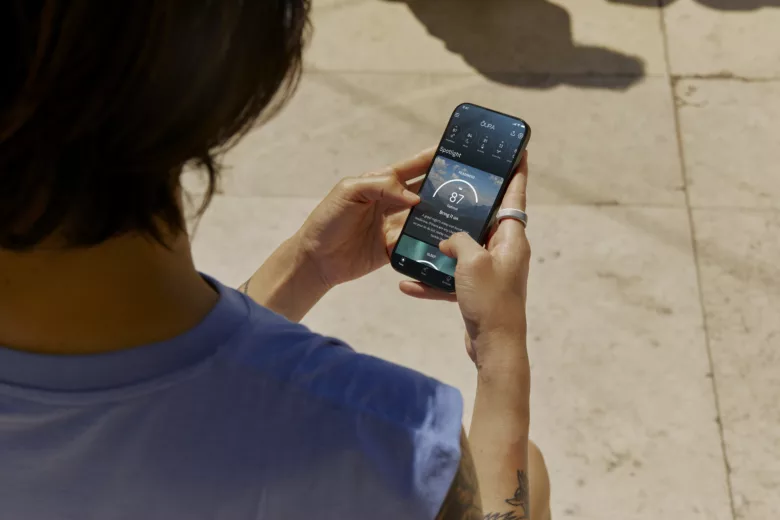
The connection is not entirely new. Counsel has been integrated into the Oura app since June: Members can move from one of the ring’s insights straight into a chat with Counsel’s A.I. and be handed off to physicians when needed. If members agree, the body data the ring continuously measures informs their care.
Going forward, the two companies plan to cover preventive, acute and chronic care. They name reproductive health, aging, and cardiovascular and metabolic health. Oura’s chief executive, Tom Hale, promises members “a 24-7 doctor in your pocket.”
Much remains open. The announcement names no price for Oura members and does not say whether the service will be included in the subscription, which costs $5.99 a month. There is no information about a launch in Europe.
Strong Numbers After the Shelved I.P.O.
Along with the acquisition, Oura released preliminary, unaudited results:
- Quarter through the end of September: Revenue rose 153 percent to $533 million (about €479 million). Adjusted EBITDA was $87 million, a margin of 16 percent.
- Fiscal year 2026: Revenue of about $1.75 billion (about €1.57 billion), up 92 percent.
- Members: More than six million paying members.
In late September, Oura postponed its Nasdaq listing, which was supposed to raise as much as $2.2 billion and would have valued the company at about $14 billion at the top of the price range. The prospectus showed where the business has come from so far: About 80 percent of revenue came from selling rings, though the subscription grew much faster and reached a gross margin of 89 percent.
The acquisition fits a series of moves Oura has made to build out the business around its hardware. Recent additions include GLP-1 Insights for people taking weight-loss drugs, a partnership with LillyDirect and a telehealth offering with MD Live for GLP-1 users. Since February, Oura has also been betting on a proprietary A.I. model for women’s health.
The Competition
Oura is not the only one heading from wearable to doctor’s office. Its American rival Whoop, most recently valued at $10.1 billion, announced video visits with clinicians inside its app for users in the United States in May and is pulling in medical records through the service HealthEx. In rings, Oura competes with Samsung’s Galaxy Ring as well as Ultrahuman and RingConn, and on the wrist, the Apple Watch remains the obvious alternative.
Then there are the A.I. companies. OpenAI has launched ChatGPT Health, a dedicated space that connects medical records and data from apps like Apple Health with the chatbot, and has bought the health tech start-up Torch. Amazon runs its own chain of primary care practices with One Medical.
A Practice on Your Finger, or a Wellness Gadget?
The acquisition raises questions that have followed Oura for some time. The company itself stresses that the ring is not a medical device and is not meant to diagnose or treat illness. The Next Web pointed to the tension between that and the promise of a doctor in your pocket, and to a class-action lawsuit filed in California in August. It accuses Oura of offering sleep-stage readings that are little better than guesses.
Researchers at Charles University in Prague and the Kempelen Institute in Bratislava concluded in an analysis published in the journal AI and Ethics that the Oura ring’s A.I. assistant can pose a high risk to users’ privacy and autonomy. In their assessment, such assistants are likely to count as high-risk systems under the E.U.’s AI Act. Last year, Oura also drew criticism over a partnership with the U.S. Department of Defense and Palantir. Mr. Hale said at the time that it involved only data from customers within the department, held in separate systems.
There are economic doubts, too. Jennifer Xu, who writes the health tech newsletter The Health POV, argued shortly before the acquisition that access to physicians does not yet make Oura a health care delivery business. The open question, in her view, is whether health services can generate revenue that does not depend on ring sales.
Oura and Counsel counter with numbers of their own: More than 90 percent of surveyed Oura members who use Counsel said their ring data helped them get better care, and Counsel’s physicians were rated 4.6 out of 5 on average. The announcement does not say how many people were surveyed. The trade publication STAT sees the deal as a sign of a growing desire to use wearables in medical care.