Wayve Will Train Its AI Driver on CoreWeave’s Cloud


Set Trending Topics as a preferred source on Google.
Teaching a car to drive in more than 70 countries takes an enormous amount of computing power, and Wayve is now getting it from the neocloud that Wall Street has been most worried about lately.
CoreWeave has announced a multi-year agreement with British startup Wayve. Wayve will train its end-to-end foundation models for autonomous driving on CoreWeave Cloud with Nvidia Blackwell GPUs and expand its evaluation and simulation there as well. The collaboration began with Weights & Biases, the platform for managing AI experiments that CoreWeave acquired in 2025. The companies did not say how much the deal is worth or exactly how long it runs.
"Our AI Driver gets better by running this data flywheel: gathering real-world driving experience, training on it, evaluating it, and deploying only what outperforms what is already on the road," said Silvius Rus, SVP of Engineering at Wayve. Access to CoreWeave’s AI cloud helps accelerate the commercial deployment of the AI Driver, he added.
What Wayve Is Building
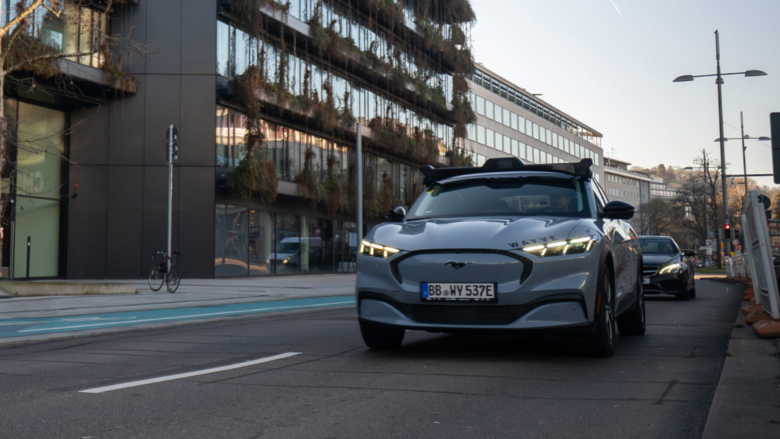
Founded in London in 2017, Wayve relies on end-to-end deep learning rather than high-definition maps and specialized sensors, unlike much of the industry. Its AI Driver learns from driving data collected in more than 70 countries and is designed to run in any vehicle regardless of hardware or map data. Wayve does not operate its own robotaxis; instead, it licenses its software to automakers and mobility platforms.
Wayve has big names behind it. In February, the startup raised $1.5 billion at a valuation of $8.6 billion. Investors include SoftBank, Microsoft, Nvidia, Uber and automakers Mercedes-Benz, Nissan and Stellantis. Together with Uber, Wayve plans to bring robotaxis to more than ten markets, starting with London. From 2027, consumers are also expected to be able to buy production cars with Wayve software.
Physical AI as a New Business for the Neoclouds
For CoreWeave, Wayve is a showcase customer in a new field. "As AI moves from the screen into the physical world, the companies leading that shift need training, evaluation, and simulation infrastructure designed to work together from the start," said Gavin Jackson, managing director EMEA at CoreWeave. So far, the company has made most of its money from large language models; according to CoreWeave, nine of the ten leading foundation model providers are among its customers.
The new deal comes at a difficult time. CoreWeave is heavily indebted and suffered a sharp selloff in its stock and bonds in October as investors questioned how it would finance further growth. During the A.I. bloodbath after the U.S. midterms, the stock lost almost 10 percent in a single day. CoreWeave is also closely tied to Nvidia, which is its supplier, investor and customer at the same time, and whose chief executive Jensen Huang is currently under pressure himself.
Competition for Customers and for the Road
The partnership is not necessarily exclusive: Wayve already uses Microsoft’s Azure cloud, and other neoclouds such as Nebius compete with the hyperscalers for compute-hungry physical AI companies. On the road, Wayve is far from alone. Waymo already runs commercial robotaxi fleets in the U.S. and recently secured a $5 billion loan for further expansion, while Tesla also relies on an end-to-end approach and trains its models in its own data centers.