Waymo Takes Out a $5 Billion Loan to Fund Its Robotaxis


Trending Topics auf Google als bevorzugte Nachrichtenquelle festlegen.
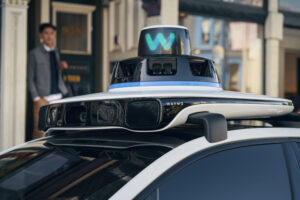
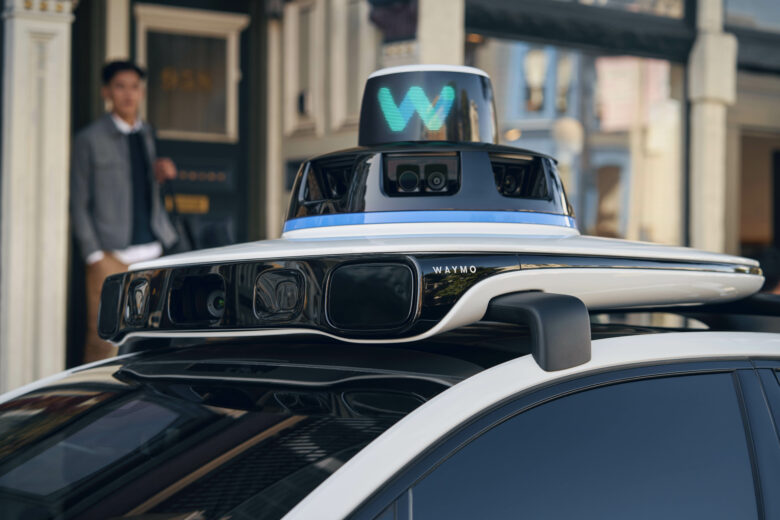
Robotaxis are no longer an experiment; they are a borrower: Waymo, Google’s sister company, has just closed its first major loan, worth $5 billion (about €4.5 billion). The lending group is led by PIMCO, Blackstone and Sixth Street, and Goldman Sachs arranged the deal. Capital Group, Loomis Sayles, T. Rowe Price, Apollo, Blue Owl, Franklin Templeton, Fidelity, HPS and Oaktree are also taking part.
More Demand Than Planned
Waymo originally wanted to borrow only $3 billion, according to Bloomberg, but increased the loan because of strong demand. The interest rate is 5.25 percentage points above the benchmark. “Our strong momentum has enabled us to complement our equity financing with debt,” Steve Fieler, Waymo’s chief financial officer, wrote. Waymo describes the move as a step toward becoming a “scaling commercial enterprise.”
Debt is new for Waymo, while equity has been plentiful. In February, the company raised $16 billion (about €14 billion) at a $126 billion valuation in a round led by Dragoneer, DST Global and Sequoia. Alphabet, Google’s parent company, remains the majority owner. Earlier rounds brought in $5.6 billion in 2024, $2.5 billion in 2021 and $3.2 billion in 2020.
London and Tokyo Are Next
The money is meant to fund expansion. Waymo now operates driverless service in 15 U.S. markets, including Phoenix, San Francisco, Los Angeles, Austin, Dallas, Houston and Miami. It is already testing in London and Tokyo and plans to launch service there, which would make it the company’s first robotaxi business in Europe. On the continent, autonomous vehicles have so far mostly appeared in public transit: The German transit technology group Init recently bought the Norwegian start-up Applied Autonomy to run driverless buses.
Rivals and Investigations
Waymo leads the market, but it is not alone. Tesla is building its own robotaxi service, Amazon is putting Zoox vehicles without steering wheels on the road, and in China, Baidu runs one of the world’s largest robotaxi fleets with Apollo Go. In Europe, the British start-up Wayve is betting on partnerships with carmakers and Uber.
At the same time, regulatory pressure is growing. The National Highway Traffic Safety Administration is investigating Waymo vehicles that illegally drove past stopped school buses, and the National Transportation Safety Board has also opened an inquiry. The N.H.T.S.A. also examined an incident in which a robotaxi hit a child near a school at about six miles per hour, causing minor injuries.