Atoco Turns Data Center Waste Heat Into Drinking Water


Trending Topics auf Google als bevorzugte Nachrichtenquelle festlegen.
Data centers guzzle water, and this start-up wants to give some back: The California company Atoco harvests drinking water from the air and powers the process with waste heat from servers. At a demonstration in Irvine in September, Atoco fed heat of about 65 degrees Celsius, simulating the waste heat of a data center, into one of its units, and shortly afterward water flowed from the tap, WIRED reported.
Nobel Prize Chemistry in a Container
Behind Atoco is the chemist Omar Yaghi, who shared the 2025 Nobel Prize in Chemistry with Susumu Kitagawa and Richard Robson for developing metal-organic frameworks. These so-called MOFs are extremely porous materials: A single gram has an internal surface area of roughly two soccer fields, according to Atoco. The pores can be designed to capture water vapor even from very dry air, at humidity levels as low as about 10 to 20 percent, the company says. When the material is heated, it releases the water, and the cycle starts again. The harvesting itself needs no electricity; heat from about 38 degrees Celsius is supposed to be enough.
The demo unit produces up to 300 liters of water a day using the waste heat of a small 20-kilowatt data center. A commercial unit producing 1,000 liters a day is in development, and Atoco hopes for its first orders by the end of the year. Five prototype trials with partners in the United States and the Gulf states have already taken place, and Samer Taha, the chief executive, says he is in talks with large tech companies about pilot projects. For him, the math is simple: Atoco takes the heat that data centers want to get rid of and gives back water, the very resource that cooling makes scarce.
Europe Requires Waste Heat Reuse
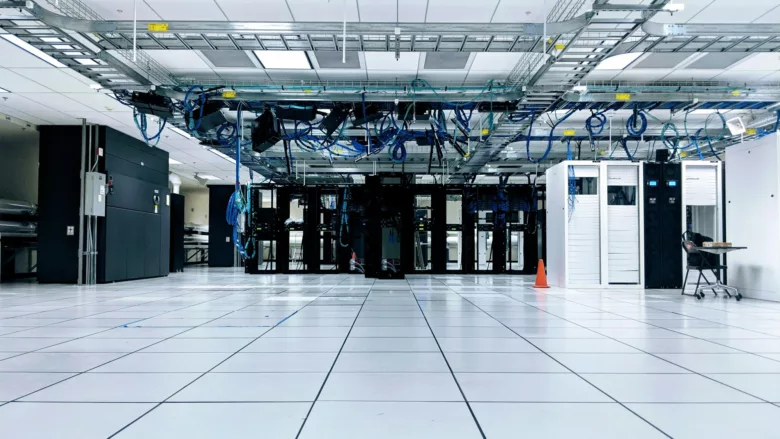
The topic is urgent because A.I. data centers consume huge amounts of power and water and face resistance in many places. Finland recently stopped Google’s data center plans. Atoco itself points to Europe: Under the E.U. Energy Efficiency Directive, data centers with more than one megawatt of capacity must in principle reuse their waste heat, while the E.U. wants to triple its data center capacity by 2035. So far, such heat has mostly gone into district heating networks, as in the OnZero project led by Viennese entrepreneurs.
Pricier Than Desalination
For now, the technology is far from the scale of large data centers. Hyperscalers sometimes use millions of liters of water a day for cooling, while an Atoco unit manages a few hundred. Atoco therefore plans to link many units together. Price is another issue: Atoco puts its production costs at about $5 (about €4.50) per ton of water, while modern desalination plants manage $2 or less. It could take three to five years before Atoco becomes cheaper, Mr. Taha said. Seth Cohen, dean of the School of Physical Sciences at the University of California, Irvine, also noted that MOFs do need energy to release the water when there is no external heat source. At large scale, the technology remains unproven.