Google’s A.I. Detector Arrives With Big Gaps on Text and Anthropic


Trending Topics auf Google als bevorzugte Nachrichtenquelle festlegen.
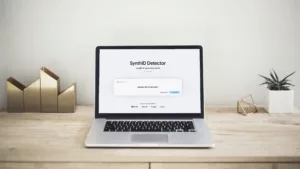
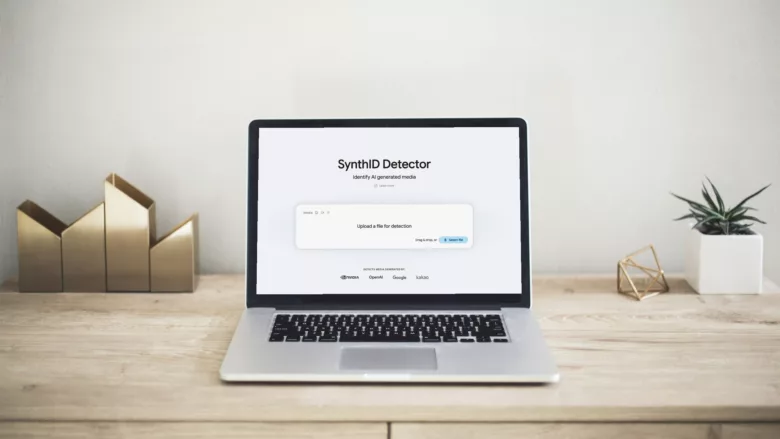
Real or A.I.? Anyone can now try to answer that question themselves: Google has just opened its SynthID Detector to all users. On synthid.com, people can upload images, videos and audio files and check whether they were created with A.I. from Google or one of its partners. The catch: Anything made without a SynthID watermark stays invisible, and the tool does not check text at all.
180 Billion Watermarked Images and Videos
Since 2023, Google has tagged A.I.-generated media with SynthID, an invisible watermark embedded directly in the pixels or the audio track. According to Google, more than 180 billion images and videos have been watermarked so far, along with audio adding up to 240,000 years. The watermark appears in content from the image model Nano Banana, the video model Veo, the music model Lyria, as well as Gemini and Flow.
Google introduced a first version of the detector last year, but only for journalists and media professionals. Now anyone can use the tool for free; all it takes is signing in with a Google, OpenAI or Apple account. It supports common formats such as JPG, PNG, HEIC and WEBP for images, MP4, MOV and WEBM for video, and MP3, WAV and M4A for audio. The detector also reads C2PA metadata, a kind of digital proof of origin that many providers attach to A.I. files.
OpenAI, Nvidia and Soon Apple on Board
The detector recognizes content not only from Google but also from partners that have licensed SynthID. They include OpenAI, Nvidia and the South Korean tech group Kakao. Apple is set to join soon, with images from Image Playground and other Apple Intelligence features. The check itself is not entirely new for users: It is already built into Google Search, the Gemini app and Chrome. According to Google, these channels now handle more than one million verification requests a day.
What the Detector Misses
As handy as the tool is, the gaps are big:
- ChatGPT text: The detector does not check text. With OpenAI, it would not work anyway: OpenAI uses SynthID for images and audio, but relies on its own technology called textGrain for text from ChatGPT and Codex. For now, only selected researchers get access to the matching detector. Anthropic watermarks Claude text with a variant of SynthID Text, but it is not one of the detector’s partners. Claude text can only be checked through a separate, closed Anthropic interface.
- Other standards: Microsoft and Meta use their own watermarks, and images from open-source models usually carry no label at all. The detector recognizes none of these.
- Removed watermarks: In some cases, editing can strip SynthID from files.
- Degree of A.I. involvement: The tool cannot tell whether a file was created entirely with A.I. or merely edited with it, and it does not show which parts are synthetic.
A negative result therefore does not mean an image is real. It only shows that no SynthID watermark was found.
A Patchwork of Standards
The core problem remains fragmentation: Google, OpenAI, Anthropic, Meta and Microsoft each rely on their own or licensed methods, alongside the industry standard C2PA, which is backed by Adobe, Microsoft and Google, among others. No detector catches everything. The E.U. A.I. Act is raising the pressure, however: Since August, A.I. providers have had to label their content in a machine-readable way in the European Union.