Record
BYD’s Yangwang U9 Xtreme Becomes the First Production Car to Top 500 km/h

Trending Topics auf Google als bevorzugte Nachrichtenquelle festlegen.
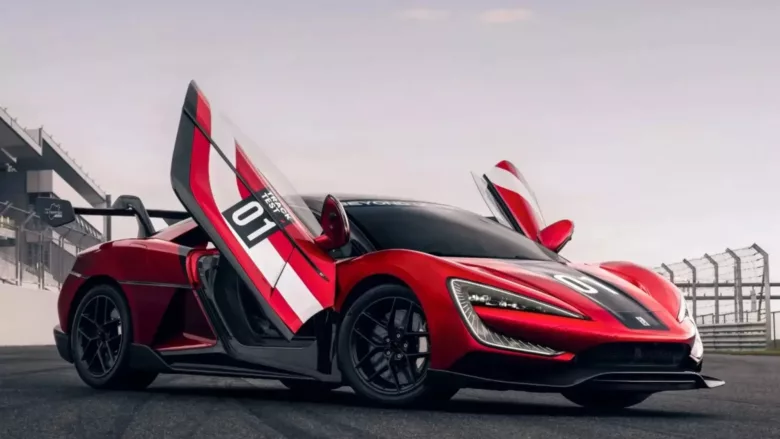
Move over, Bugatti, China is in the fast lane now: BYD’s electric hypercar, the Yangwang U9 Xtreme, has become the first production car in the world to break 500 kilometers per hour. On a closed highway in Abu Dhabi, the car reached 503.17 km/h (312.66 mph) in early November, earning two Guinness World Records in one go.A Record Run on the Highway
The German endurance racer Marc Basseng was behind the wheel. The run took place on a closed section of the Sheikh Khalifa bin Zayed International Road (E11) in the Al Dhafra region, where the usual speed limit is 160 km/h, according to The National. Before the attempt, BYD had the road swept for wire fragments left by cleaning brushes, since at that speed any debris can destroy a tire. „We took on an entirely different challenge: pushing the limits of speed on a public road in Abu Dhabi,“ Mr. Basseng said. It did not go smoothly at first. In early attempts, the car topped out at about 490 km/h, according to Forbes. Only after adjustments to the rear wing’s angle, tire pressures, damping and control software did it break the 500 km/h barrier. The speed was measured with a calibrated data-logging system and confirmed by a representative of the F.I.A., motorsport’s governing body. Guinness awarded two titles: highest speed by a production car and highest speed by an electric production car, both for a single-direction run. Last year, the U9 Xtreme had already reached 496.22 km/h at the Papenburg test track in northern Germany, overtaking the Bugatti Chiron Super Sport 300+. Stella Li, BYD’s executive vice president, said the record „moves the benchmark for pure electric power even further ahead of where others might dream.“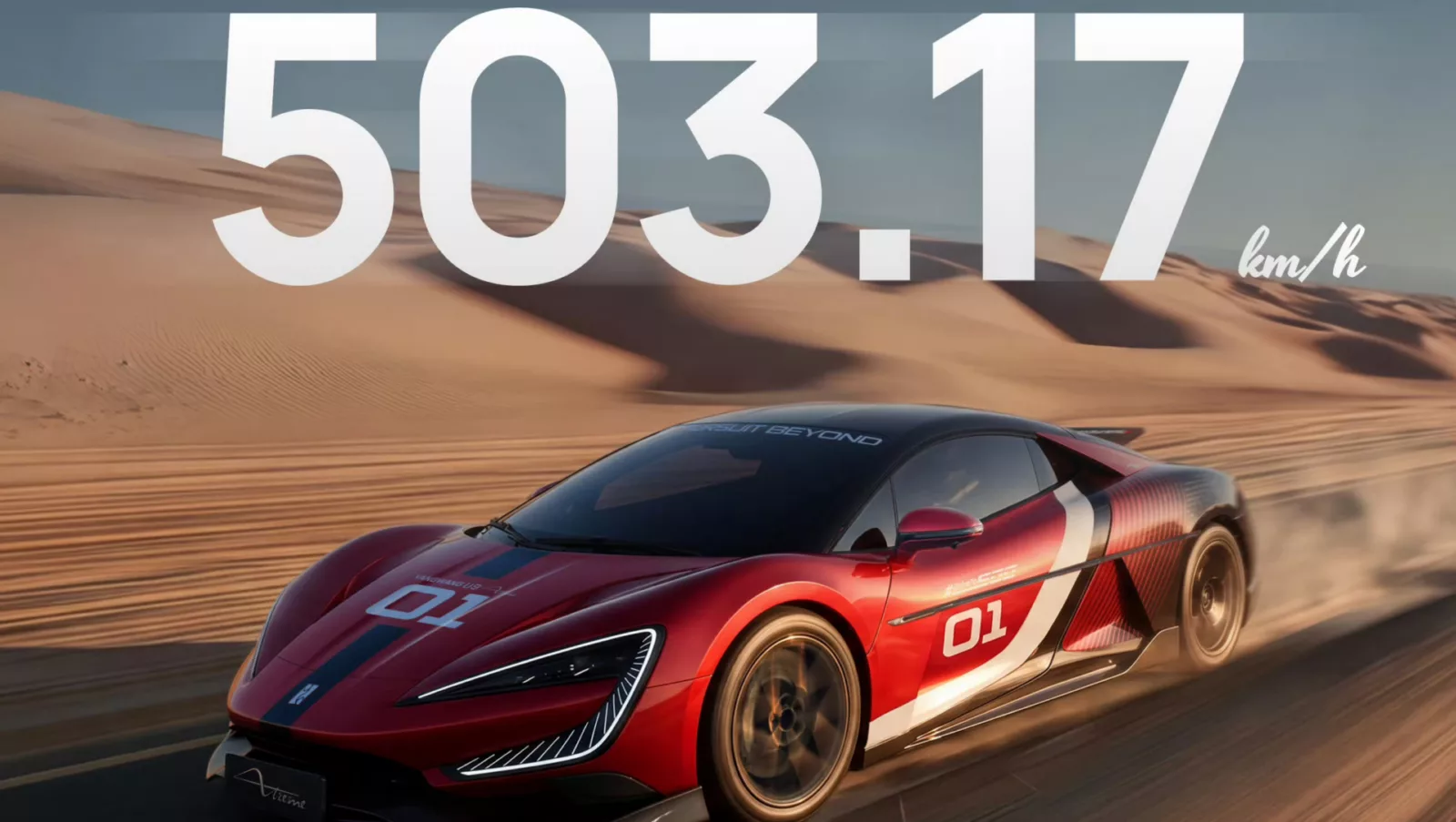
3,000 Horsepower and 1,200 Volts
Under the body are four electric motors spinning at up to 30,000 r.p.m., with a combined output of about 3,000 metric horsepower, roughly 1,200 per metric ton. That gives the U9 Xtreme about 50 percent more power than the electric hypercars Rimac Nevera and Lotus Evija, according to Forbes. The electrical system runs at 1,200 volts, and energy comes from a lithium iron phosphate battery in BYD’s Blade design. Grip comes from semi-slick tires developed specifically for the car by Giti Tire. Compared with the base U9, which BYD launched in 2024 at 1.68 million yuan (about 215,000 euros), the Xtreme version adds a large carbon-fiber front splitter, a rear diffuser and a tall rear wing. Only 30 will be built. According to media reports, the hypercar will cost more than 20 million yuan in China, or over 2 million euros. The first customers have already finalized their individual specifications.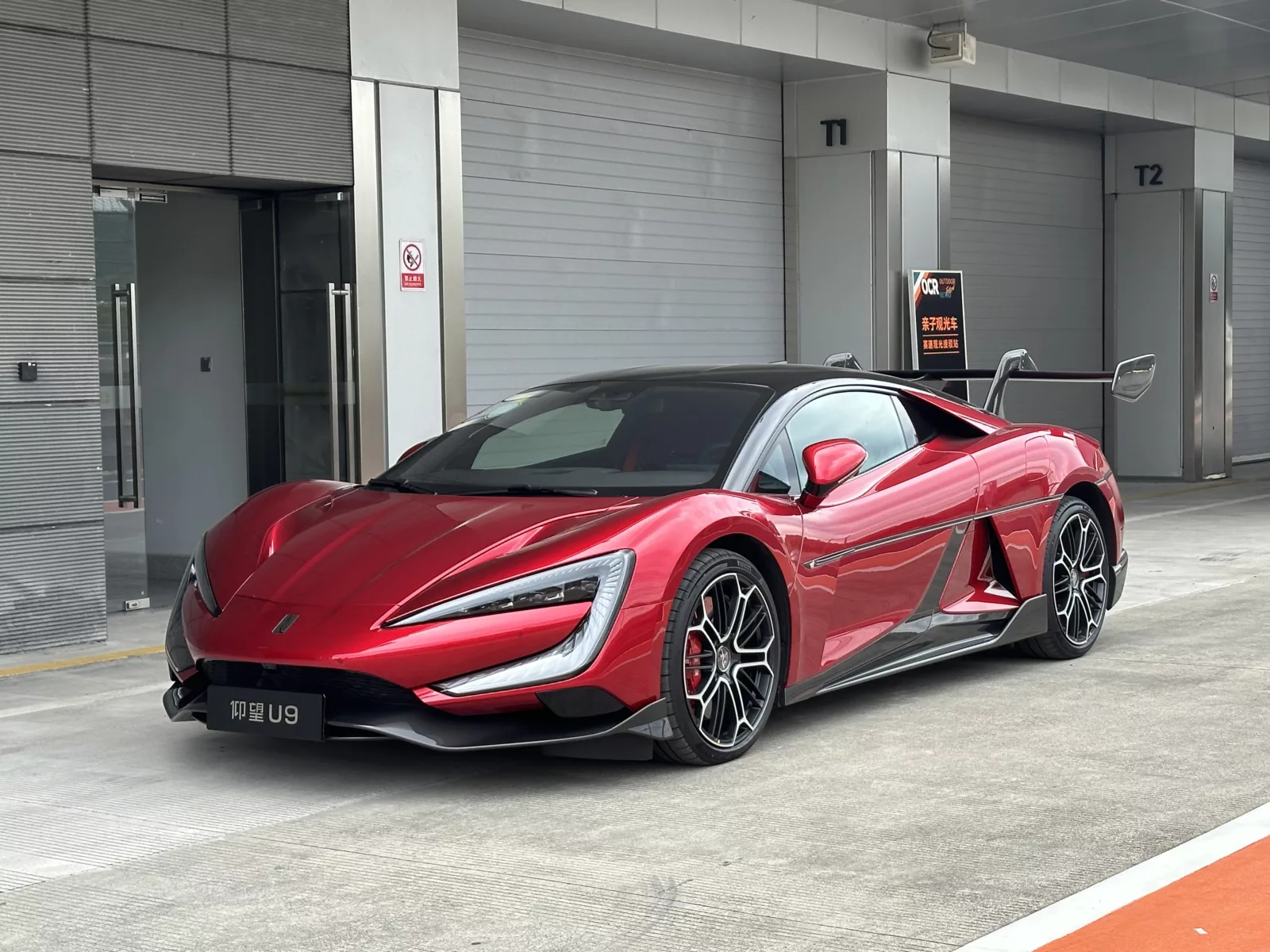
The Competition
With the record, BYD moves ahead of the established supercar makers. In 2019, Bugatti became the first manufacturer to break the 300 mph barrier (about 483 km/h) with the Chiron Super Sport 300+, reaching 490.48 km/h. The Croatian electric pioneer Rimac hit 412 km/h with the Nevera, and since 2017, Koenigsegg has held the record for the fastest two-way average with the Agera RS at 447 km/h. The much-hyped Tesla Roadster is not due until 2028. For BYD, the U9 is primarily an image project: Its luxury brand, Yangwang, sold just over 100 units of the base model in China in 2025, but it regularly shows off what the technology can do, as it did on the Nürburgring’s Nordschleife.A Record With an Asterisk
The record is not quite as clear-cut as it sounds, though. Guinness itself stresses that the titles relate specifically to peak speed in a single direction and should not be confused with conventional fastest-production-car records. Those usually require the average of two runs in opposite directions within an hour, to cancel out tailwinds and gradients. That is why the U9 Xtreme’s Papenburg figure was excluded from Wikipedia’s list of the fastest production cars, for example. Bugatti’s 490 km/h was also achieved in only one direction. It is also unclear how close the 30 customer cars will come to the record car, which was specially optimized for the run. According to Forbes, it is not known whether the special record tires will be supplied to customers or whether production cars can actually reach that speed.