TSMC Posts Record Profit and Sets Terms for Musk’s Terafab


Trending Topics auf Google als bevorzugte Nachrichtenquelle festlegen.
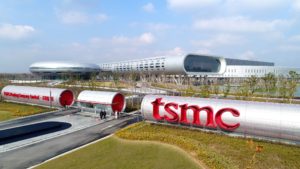
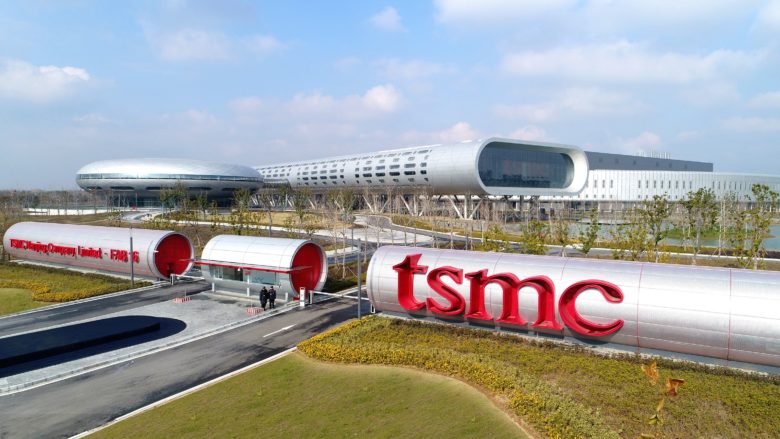
The A.I. boom shows no sign of letting up at TSMC: The world’s largest contract chipmaker has just reported a record profit for the sixth quarter in a row. Third-quarter net income rose 68.7 percent to 763 billion New Taiwan dollars, or about $24 billion (about €21.5 billion), CNBC reports. That beat analysts’ expectations. At the same time, TSMC’s chief executive, C.C. Wei, made clear on what terms the company would take part in Elon Musk’s planned chip factory, Terafab.
The Numbers
Revenue came in at $46.7 billion (about €41.7 billion), up 16.2 percent from the previous quarter and above the top end of the company’s own guidance. The gross margin reached 66.4 percent. The bulk of the business comes from high-performance computing, which includes A.I. accelerators: It now accounts for 68 percent of revenue, while smartphones make up only 21 percent. Advanced manufacturing processes of 7 nanometers and below account for 79 percent of wafer revenue.
For the fourth quarter, TSMC expects revenue of $52.3 billion to $54.3 billion (about €46.7 billion to €48.4 billion), which would be an increase of about 58 percent from a year earlier. For the full year, the company expects growth of about 44 percent. It plans to invest $60 billion to $64 billion (about €53.5 billion to €57.1 billion) this year, with significantly more to come over the next three years.
‘No Sign of Slowdown’
Mr. Wei struck an upbeat tone when presenting the results. “Demand is extremely robust. We did not see any sign of slowdown,” he said. The gap between demand and supply is “still quite big,” he added. “All the A.I. players are working with TSMC,” and the company has “no intention to leave food on the table for others.” TSMC’s previous forecast for annual growth in A.I. accelerators, in the mid- to high-50 percent range, “probably will be higher,” he said.
TSMC is expanding accordingly. Its 2-nanometer production is ramping up in Hsinchu and Kaohsiung, and capacity is set to more than double in 2027. The next generation, A14, is scheduled for volume production in 2028. Additional 3-nanometer fabs are being built in Tainan, and the second fab in Arizona is set to start volume production in the third quarter of 2027. Bottlenecks run through the entire supply chain: The lithography specialist ASML says it cannot build machines fast enough to meet the industry’s demand.
Who Runs the Terafab?
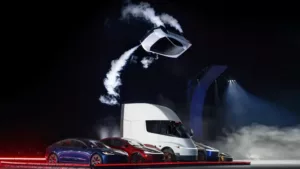
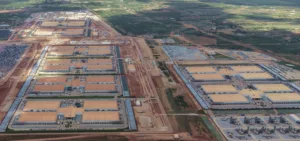
Things get interesting in Texas. TSMC is evaluating another site there and, according to Mr. Wei, is in talks with a customer about the Terafab project. Behind it is Mr. Musk’s plan to build a dedicated chip factory for Tesla and SpaceX that would supply computing power for A.I., robotaxis, robots and spaceflight. Mr. Wei set a clear condition: “The fab has to be run by TSMC.”
Mr. Musk recently put it very differently. “No, we will build and run the fab. Let there be ZERO doubt about that,” he wrote on X. TSMC could at most sublease part of the Terafab, “but nothing more than that.” How the two positions can be reconciled remains unclear. Mr. Wei estimates that building a new fab takes two to three years. The Terafab is also seen as one of the arguments for a possible merger of Tesla and SpaceX, since it would be easier to carry out within a single company.
The Competition and the Risks
In the market for the most advanced chips, TSMC currently faces little serious competition. Samsung and Intel are trying to catch up with their own foundry businesses but lag well behind in volume and customer base. Mr. Musk’s Terafab would be another attempt to become less dependent on TSMC.
The business still carries risks. Rising component prices and economic uncertainty are weighing on smartphones and other consumer devices, so TSMC is planning cautiously for 2027. Its overseas fabs are also squeezing margins, by three to four percentage points in the future instead of about two so far, according to TSMC. And the International Monetary Fund recently warned of a debt spiral in the A.I. build-out: If investment in data centers were to collapse, TSMC would feel it too.